 |
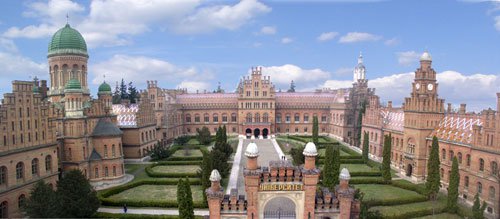
Chernivtsi Universy image source: heritage.org |
I was quite skeptical about it, actually, since the National Art Museum of Ukraine was in Kiev, which was almost thirteen hours away from Chernivtsi by train. Thirteen, could you believe it? However, Annie insisted that she had to go there no matter what, so we ended up spending thirteen hours of our precious time in Ukraine on the train. (And I thought spending two hours on the plane without television was bad.) On the way there, Annie showed me a brochure of the museum which, luckily, was in English. Founded in 1996, the museum used to be called the City Museum of Antiques and Art, and it was only until 1994 did the museum reach an international level. I don't really know how to describe it, but the exterior of the museum gave off a kind of ancient artistic kind of feeling. Well, you can just see it for yourself:
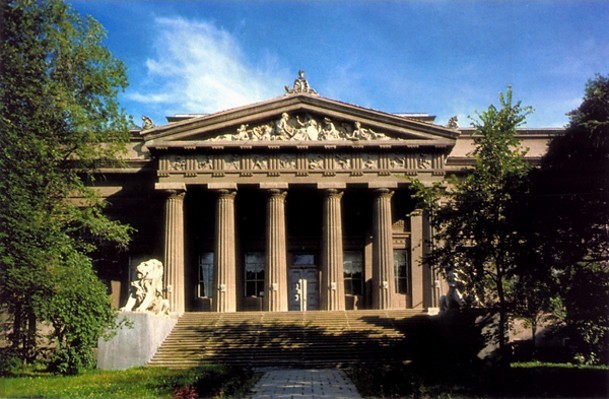 |
| National Art Museum of Ukraine image source: encyclopediaofukraine |
 |
| Andreevsky Church at night image source: visitkievukraine.com |
Annie and I actually planned to visit some orthodox churches which are apparently quite famous in Ukraine, but we ended up not having enough time to do so, which was quite disappointing. However, I managed to find a brochure at the National Art Museum that introduced me to orthodox churches a bit more. It was a brochure of the Andreevsky Church in Kiev, and it had lot of interesting facts and details about both the church and the religion practiced. Orthodox Christianity was accepted then widely spread in Europe by Prince Vladimir the Great in 988 A.D, and it is the religion that around seventy percent of Ukrainians practice today. One of the major accomplishments were that they translated the sacred writings in the Bible into Slavonic so that more people could actually read and understand it. The brochure also provided many pictures which just made me want to visit more, but oh well. We'll be heading to San Marino in a few hours, so there's no time to spare.

What's Slavonic?
回覆刪除It's another term for the Slavic languages, which is basically a bunch of languages that is usually divided into East (Russian, Ukrainian, Byelorussian), West (Polish, Czech, Slovak, Sorbian), and South (Old Church Slavonic, Macedonian, Bulgarian, Serbo-Croatian, Slovene) Slavic.
刪除